
A dresspack carries power, signal, air and process media from the robot base out to the tool, through six axes that never stop moving. It is also a common cause of unplanned downtime. A snagged hose, a chafed conductor or a collision with a fixture stops a cell just as fast as a failed drive, and it usually gets blamed on something else first.
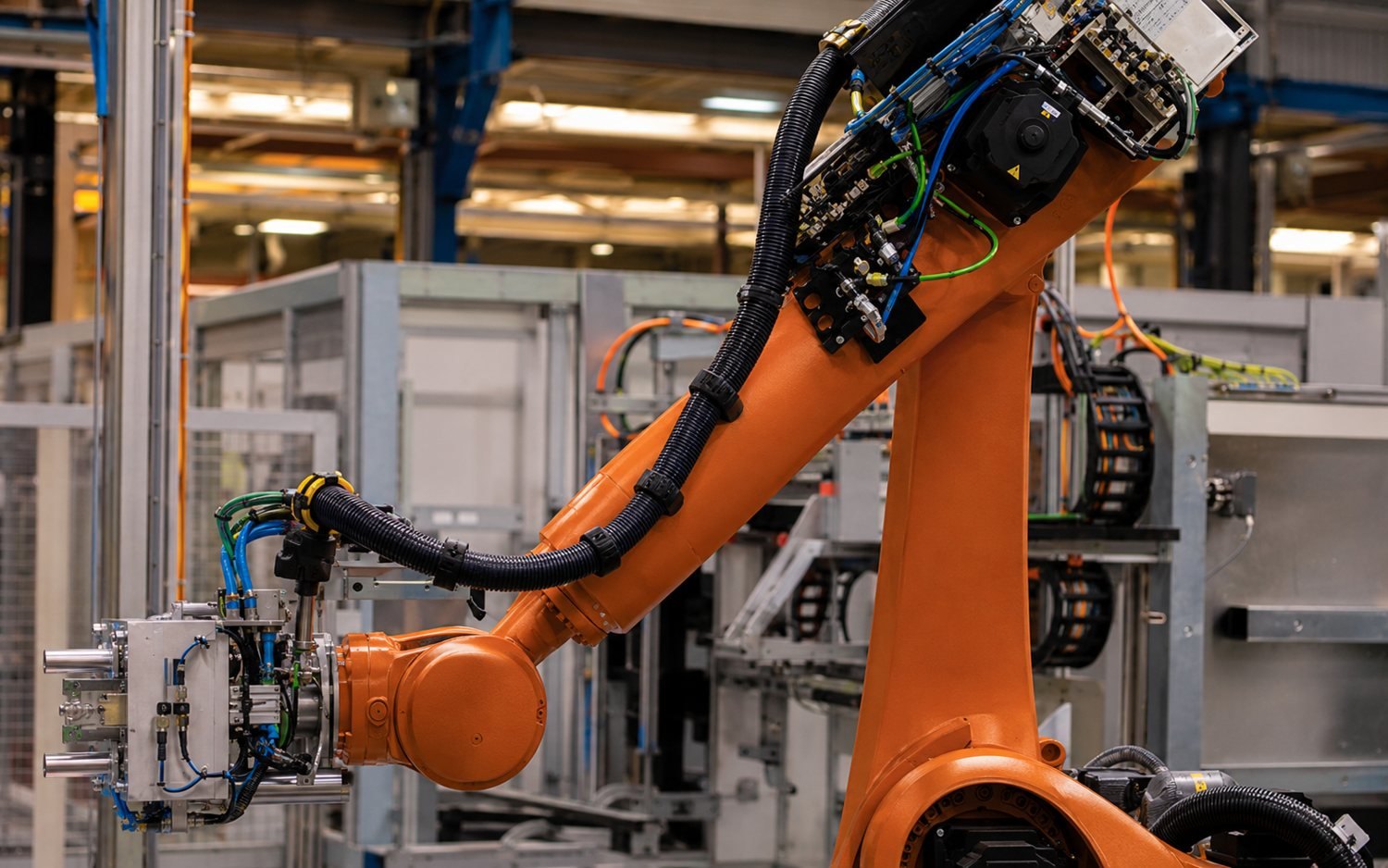
We supply, build and install packs for the work most lines actually do, and design from scratch when a standard kit does not fit.
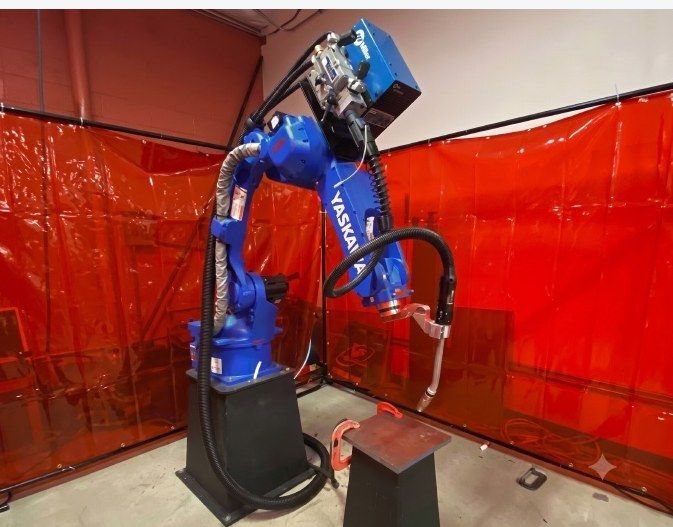
Torch cable, shielding-gas hose and wire-feed conduit bundled and strain-relieved for continuous-duty MIG/MAG and TIG cells.
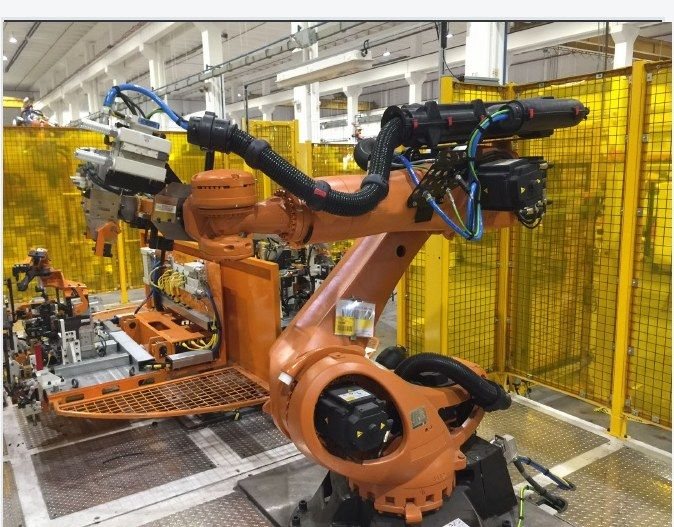
Heavy-gauge secondary current cable and water-cooling lines routed for high-current gun loads, built to survive constant flex cycles.
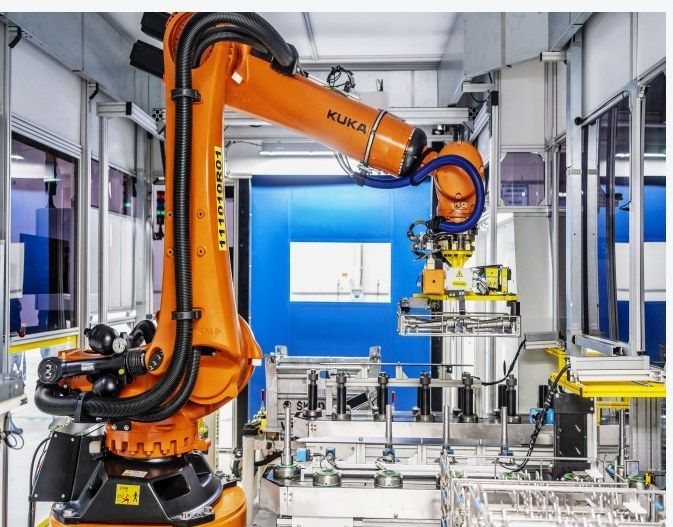
Multi-line air tubing and quick-couplings run out to the gripper. Sized so pressure still holds up at full reach.
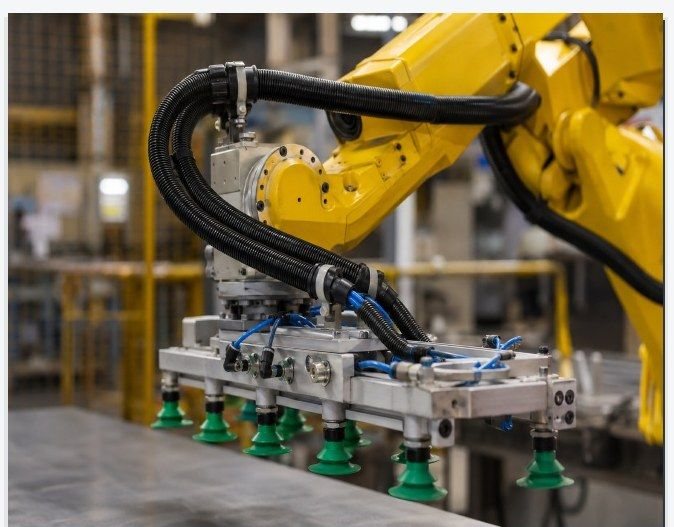
Vacuum hose bundles sized for suction-cup and end-of-arm tooling in pick-and-place and material-handling cells.
Most pack failures trace back to one of four things, and each of them is a specification decision.
Slack loops catch on fixtures, jigs and cell walls. We keep the pack close to the arm and check the trajectory for anything it can hit.
Axis 4 to 6 rotation twists the bundle past its rated angle. Correct component length and a pivot at the wrist relieve it.
Rubbing at clamps, brackets and casting edges wears the conduit through. Sleeving and correct clamp spacing prevent it.
Conductors and couplings break at the strain-relief point. Only robot-grade cable rated for millions of 3D flex cycles survives it.
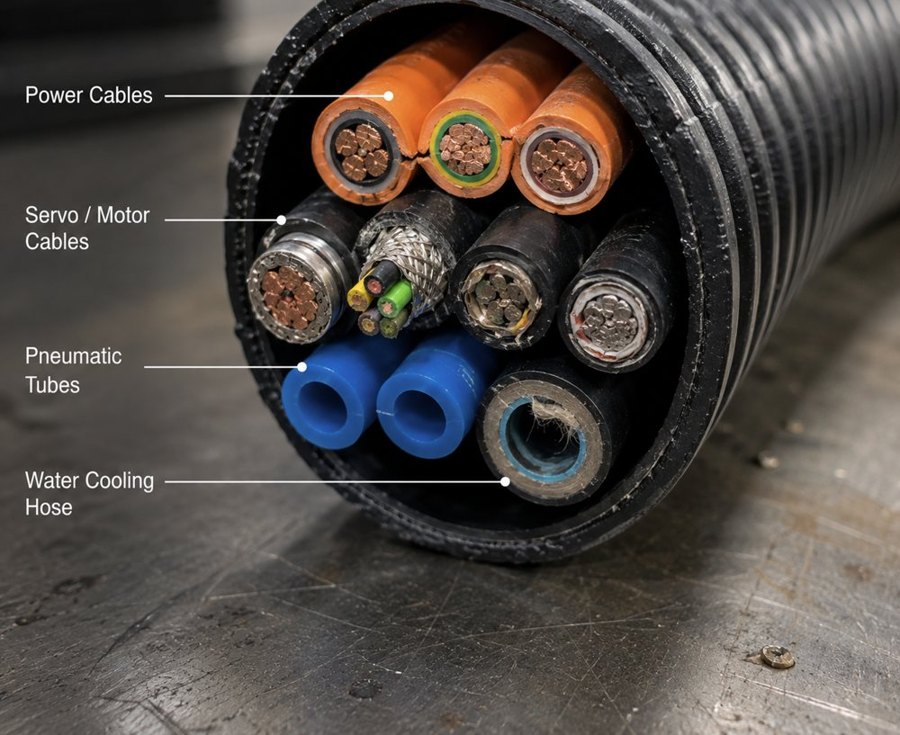
A dresspack is an assembly. The retraction unit, conduit, brackets, clamps, couplings and the conductors inside all get specified together against the robot model, the reach and the duty cycle.
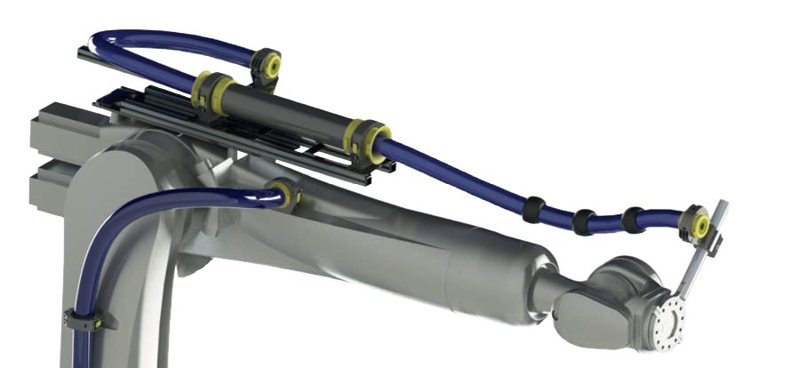
Compression-spring unit on the corrugated hose. Suits simple trajectories and short retraction lengths. Easy to service in the cell.
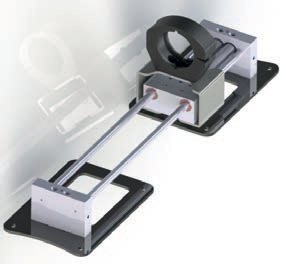
Compact housing on axis 3 carrying up to two packs. Mounts vertically, horizontally or overhead. Typical stroke 250 to 500 mm.
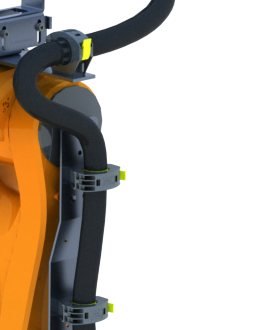
Bracket-and-clamp routing with no retraction element, for low-dynamic handling, machine tending and gantry applications.
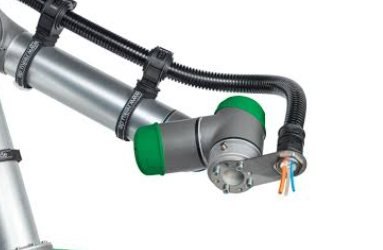
Strap-mounted flexible guides for collaborative and lightweight arms. No tools, no drilling, nothing modified on the robot.
Corrugated hose for general cells, smooth tube where the cell gets wiped down or sees spatter and abrasive media. Other widths adapted on request.
| NW | Typical use |
|---|---|
| NW 29 | Cobot and lightweight arms, signal-only packs |
| NW 36 | Pneumatic handling, small payload grippers |
| NW 48 | Arc welding, vacuum handling, general purpose |
| NW 56 | Combined power and media, medium payload |
| NW 70 | Spot welding, high current and water cooled |
| NW 95 | Heavy payload, twin packs and special machines |
A retractable reel keeps the pendant cable off the floor and out of the cell. It takes out the trip hazard, keeps the cable away from where it gets crushed, and heads off the usual cause of pendant connector failure. Several drum sizes and cable lengths, for all major robot controllers.
A catalogue pack for a common robot and application, supplied complete and ready to fit. Cheapest and quickest, provided the robot is standard and the cell has room.
A standard system with changed conduit length, altered bracket positions or a different media mix. Covers most retrofits and extended-reach robots.
Designed from the trajectory up for non-standard reach, unusual payloads, special machines or gantries. Includes bracket design and on-arm validation.
A well-built dresspack that is badly installed, or never looked at again, will still fail. We cover the whole cycle with our own service engineers, on your floor.
Before anything is quoted we work out what the pack has to survive.
Fitted by our own engineers, then tuned against the robot program.
Confirmation that the install matches spec and is fit for serial production.
A scheduled inspection plan usually costs less than paying for breakdown repairs, and it makes the spend predictable.
Costed up front, for measuring, handling and welding packs alike.
Make, model and variant, plus mounting position: floor, wall, ceiling or shelf.
What the tool does: welding, handling, gluing, measuring, cutting.
Every line the pack must carry: power, signal, bus, air, water, gas, vacuum.
Temperature, weld spatter, dust, coolant, wash-down or abrasive media.
A few shots of the arm and the cell. This alone answers most of our questions.
We diagnose it, quote a fixed price, repair, test, and send it back with a report. Usually inside the week. Ship it with the robot model, the application and a description of the fault.